Article
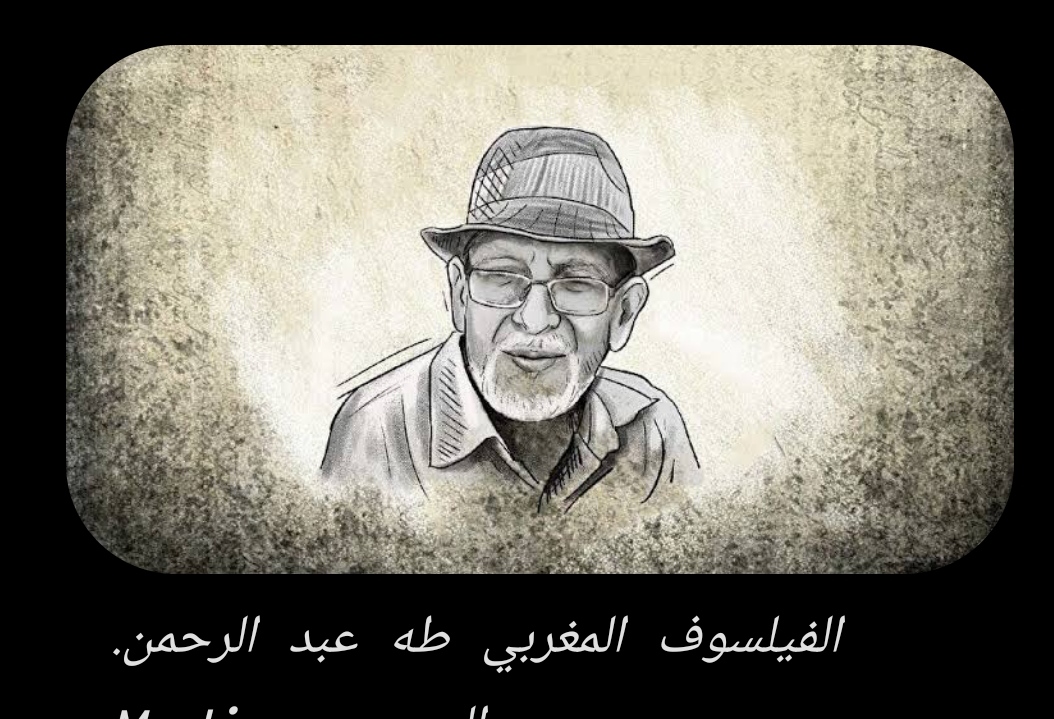
From Philosophical Critique to Existential Diagnosis An Interpretive Reading of the Analysis of Taha Abdurrahman's Project
09 juin 2026
Introduction: The Meaning of 'Interpretive Reading' of Philosophical Critique What does it mean to "read" a critical analysis of a philosophical project from the perspective of interpretive psychology? It means that we do not view this analysis as merely a "judgment" on Taha Abdurrahman's project, but as a "clinical document" that reveals – consciously or unconsciously
From Philosophical Critique to Existential Diagnosis
An Interpretive Reading of the Analysis of Taha Abdurrahman's Project
Introduction: The Meaning of 'Interpretive Reading' of Philosophical Critique
What does it mean to "read" a critical analysis of a philosophical project from the perspective of interpretive psychology? It means that we do not view this analysis as merely a "judgment" on Taha Abdurrahman's project, but as a "clinical document" that reveals – consciously or unconsciously – an "existential-psychological structure" underlying the philosophical discourse. It is a reading that does not ask: "Is this critique correct?" but rather: "What is the 'map of psychological religion' that this critic operates with? What are the 'ribs' they activate? And which 'existential station' do they occupy?"
In this sense, philosophical analysis transforms into a "clinical case" (Clinical Case) that can be diagnosed using the tools of interpretive psychology. This does not mean reducing philosophy to psychology, but rather "enriching" philosophical understanding with a deeper analytical layer that touches the existential roots of ideas.
Chapter One: Analysis of the Critic's Methodological Framework – 'The Map of Their Psychological Religion' and 'Methodological Moral Schizophrenia'
1.1 Methodological Introduction: A 'Dual Existential Position'
The critic begins their analysis by clearly defining their methodological framework: they combine "the tools of Western rational philosophical critique" with "interpretive theory" and "the sociology of knowledge." This definition is not innocent. It reveals – from our perspective – a certain "existential position": the critic stands on a "dual foundation," one foot in the Western critical heritage and one foot in Islamic thought. This – in interpretive psychology – is the very essence of "methodological moral schizophrenia": to critique "duality" in others while practicing it yourself at the level of your tools.
What we see here is an "interpretive paradox": the critic uses "Western" tools (rationality, interpretation, sociology of knowledge) to critique an "Islamic" project (Taha Abdurrahman) that itself seeks to overcome the binary between "authentic" and "foreign." The critic, in this sense, lives – without knowing it – the same "duality" they critique in Taha Abdurrahman.
1.2
The critic uses "Western" tools (rationality, hermeneutics, sociology of knowledge) to critique an "Islamic" project (Taha Abdurrahman) that itself seeks to transcend the binary between "authentic" and "foreign." The critic, in this sense, lives—without knowing it—the very "duality" they criticize in Taha Abdurrahman.
1.3 Classification of the Three Critical Currents: An 'Undeclared Map of Psychological Religion'
The critic classifies the critical literature into three currents: the "Absolute Celebration" current, the "Methodical Skepticism" current, and the "Comparison" current. From our perspective, this classification is not merely a "description" of the academic reality, but an "projection" of the structure of the critic's own "map of psychological religion." They see the intellectual arena divided into:
• "Debtors" to the project (the first current): those who see themselves as "indebted" to Taha Abdurrahman for intellectual renewal.
• "Creditors" of the project (the second current): those who demand he "repay" epistemological debts.
• "Neutrals" (the third current): those who compare without bias.
The critic themselves oscillates between the three positions, which places them in a state of "methodological existential tension" that has not yet been resolved.
Chapter Two: Deconstructing the Epistemological Axes – From 'Bare Reason' to 'The Commanding Self' in Knowledge
2.1 The Problem of 'Tentativeness of Theoretical Theology' as an Expression of 'Resistance to Diagnosis'
The critic points out that when Taha Abdurrahman decides that theoretical theology is "tentative, not certain," he "releases a dangerous reins that may lead to cognitive relativism." Then he asks: "Is this distinction sufficient to justify the claim of tentativeness?"
Here, the critic practices – without knowing it – what we call in TLRT "Resistance to Diagnosis." They refuse to "diagnose" Taha Abdurrahman's "bare reason" because it threatens their "cognitive security." The critic wants to keep "certainty" in theology because this certainty is their "secure base" against existential anxiety. Admitting that rational arguments for God's existence are "tentative" is – from the perspective of the "commanding self" in knowledge – a threat to losing control.
What the critic does here is "activating the seventh rib" (Satan ← commanding): they magnify the fear of "relativism" and transform "tentativeness" (which is a modest description of the state of the human mind) into a "danger" threatening the foundations of religion.
2.2 The Problem of 'Duality of Terminology' and 'The Trap of Deconstruction'
The critic critiques Taha Abdurrahman's assumption that there is an "authentic meaning" and a "foreign meaning," seeing this distinction as "simplification that ignores the real complexity of cognitive interactions." They ask: "Can 'authentic meaning' truly be recovered?"
Here, we see the critic falling into "The Trap of Deconstruction" (Deconstruction Trap). They practice "deconstruction" of the binary authentic/foreign, but they don't offer an alternative. This position – in interpretive psychology – is the very essence of "methodological existential void." When you "deconstruct" everything and build nothing, you leave the reader in a state of "cognitive uncertainty" that may be more destructive than the "illusory certainty" you critique.
What the critic lacks here is our concept of "the primordial foundation" (Moral OS). The "authenticity" that Taha Abdurrahman seeks is not a "pure return" to a lost past, but a "factory reset" according to what "primordial nature" permits. The authentic is not the "past," but "living primordial nature" in the present.
2.3 The Problem of 'Faith Experience as a Cognitive Standard': Between 'Supporting Reason' and 'The Serene Self'
The critic asks: "What guarantee prevents the alleged faith experience from being an illusory or subjective experience?" Then they add that "the 'ethical transformation' standard does not precisely determine what this transformation is or how it can be measured."
This is a legitimate question, indeed – from our perspective – the central question. But the critic poses it as "evidence of condemnation" of the project, while it is actually "evidence of need" for interpretive psychology itself! The "faith experience" that Taha Abdurrahman speaks of cannot be "measured" by the standards of "bare reason." But it can be "diagnosed" by our tools. We offer "criteria" for distinguishing between sincere and illusory experience:
1. The "map of psychological religion" criterion: Does the experience produce "real debts" (a sense of responsibility) or "illusory debts" (a sense of generalized guilt)?
2. The "behavioral bridge" criterion: Does the experience transform into tangible "ethical agency"?
3. The "psychological kintsugi" criterion: Does the experience transform "wounds" into "gold"?
What the critic does is demand from Taha Abdurrahman a "quantitative measurement" of a "qualitative" phenomenon. This – in interpretive psychology – is the error of "reduction of existential station": asking the "serene self" to speak the language of the "commanding self."
Chapter Three: Deconstructing the Metaphysical Axes – 'Existential Hierarchies' and 'The Crisis of the Center'
3.1 The Problem of 'Ontological Pluralism' and 'Rational Centrism'
The critic asks about the nature of the relationship between "the realm of kingship" and "the realm of divine sovereignty," seeing Taha Abdurrahman's conception as "conflicting with the prevailing rational position in classical Islamic philosophy."
Here, we see the critic practicing what we call "Rational Centrism" (Rational Centrism). They assume that "the prevailing rational position" is "the standard" against which other conceptions should be measured. This – in interpretive psychology – is an expression of "the crisis of the center" (Crisis of the Center). When you lose "transcendent reference" (the Kaaba, revelation), you search for an alternative "center," so you find "reason" as a center. But reason – as Taha Abdurrahman himself proved – is "plural," not "one." You replace a "real center" (revelation) with an "illusory center" (bare reason).
3.2 The Problem of 'Critique of Contemporary Man' and 'Interpretive Anxiety'
The critic critiques Taha Abdurrahman's dark view of "contemporary man," asking: "Was the classical Islamic civilization morally superior to contemporary civilization?"
This critique – from our perspective – is an expression of "interpretive anxiety" (Vicegerent Anxiety). The critic fears that "the critique of modernity" will lead to "rejecting contemporaneity," which threatens their "interpretive project" that assumes "dealing with" reality not "withdrawing from" it. But what the critic misses is that Taha Abdurrahman does not call for "withdrawal," but for "transformation" within modernity. He wants "purification of the soul" in the heart of the battle, not "escape" from it.
3.3 The Problem of 'The Most Beautiful Names' and 'The Authority of Interpretation': Toward 'The Living Expert'
The critic critiques the lack of clarity in "the mechanism for distinguishing between correct and incorrect interpretation" in Taha Abdurrahman's project. This – from our perspective – is the most dangerous problem in the project, but the critic does not offer a solution.
In interpretive psychology, we offer a solution through the concept of "the living expert" (Living Expert). The "authority of interpretation" does not belong to the most "knowledgeable" (the traditional jurist), nor to the most "tasteful" (the intuitive jurist), but to the most "transformed." The "living expert" is one who has "lived" the transformation, achieved "psychological kintsugi," and become a "witness" to truth through their behavior, not just their words. Thus, "interpretive authority" shifts from "knowledge" to "existence."
Chapter Four: Deconstructing Moral and Political Critique – 'The Vices of the Guided Reason' and 'The Eight Ribs'
4.1 Critiquing Religious Practices as 'Diagnosis of the Ribs'
Taha Abdurrahman enumerates the vices of religious practices: pretension, imitation, abstraction, politicization. We have shown in our previous analysis how these vices are distortions of "the blaming self" and pathological activations of "the ribs":
• Pretension: is a "sick blaming self" that has turned into a "harsh superior ego."
• Imitation: is "paralysis" of the blaming self (functional atrophy).
• Abstraction: is "calcification" of the blaming self (loss of dynamism).
• Politicization: is "kidnapping" of the blaming self by "the commanding self."
But what we add here is that the critic themselves – when critiquing these vices – may be caught in some of them without knowing. When they describe Taha Abdurrahman's project as "simplification" or "excessive generalization," they are practicing – perhaps – the opposite "abstraction." And when they use "sociology of knowledge" to reveal "the hidden relationships between philosophical discourse and social contexts," they are practicing – perhaps – the reverse "politicization," where "context" becomes the sole "interpreter," and "truth" disappears behind "circumstances."
4.2 The Problem of 'The Authority of Interpretation' as an Expression of 'The Crisis of the Living Expert'
The critic returns to the problem of "the authority of interpretation" and asks: "Who guarantees that what the traditional observer offers is not merely subjective projections? Who guarantees that what the intuitive observer offers is not merely illusions?"
Here, the critic reaches the "maximum danger zone." They almost admit that the "void" in Taha Abdurrahman's project cannot be filled except by the logic of "the living expert." But they don't have the concept, so they stop at the edge of the question, unable to answer. They see "the gap" but don't have "the tool" to fill it. This – in interpretive psychology – is "the moment of truth" (Moment of Truth) that precedes "transformation."
Chapter Five: Methodological and Comparative Critique – 'The Critical Reason' and 'The Dilemma of Deconstruction'
5.1 The Absence of the Historical Dimension: 'Time' and 'The Primordial Foundation'
The critic critiques the "absence of the historical-evolutionary dimension" in Taha Abdurrahman's analysis of terms. They see him "dealing with them as fixed entities."
This critique – from our perspective – reveals a "conception of time" different between the critic and Taha Abdurrahman. The critic – influenced by "genealogy" – sees "time" as a force of "continuous transformation," with no stability in it. As for Taha Abdurrahman – influenced by Sufism – he sees "time" as a "veil" that hides the "fixed" (primordial truth). They – in truth – do not contradict each other, but view "time" from "two different stations."
In interpretive psychology, we solve this problem through the concept of "the primordial foundation." "Primordial nature" is "fixed" in its origin (the double inspiration), but "transforming" in its activation (through the eight ribs). Thus, we can accept the "fixity" of original meanings (as primordial purposes), and accept the "transformation" of words (as expression tools). This is what allows "authenticity" that does not deny "history," and "historicism" that does not deny "authenticity."
5.2 Comparisons with Other Projects: 'The Critic's Existential Position'
The critic compares Taha Abdurrahman's project with the projects of Jabiri, Mehler, and Goodin. These comparisons reveal – more than they reveal about Taha Abdurrahman – the "reading map" of the critic themselves. They read Taha Abdurrahman through the "lenses" of others: once through "Jabiri" (sociology of knowledge), once through "Goodin" (critique of modernity), and once through "classical heritage" (Ibn Khaldun, Al-Ghazali, Ibn Arabi).
This "referential multiplicity" – from our perspective – is an expression of "richness" not "contradiction." But it may turn into "scattering" if the critic does not have a "center" that organizes these references. This "center" – in interpretive psychology – is "the interpretive identity": knowing "why" you read before you read.
Interpretive Conclusion: The Critic as a 'Clinical Case' and as a 'Potential Living Expert'
First: The Critic as a 'Clinical Case'
Through this reading, we can diagnose the "case" of the critic as follows:
1. Their "map of psychological religion": The critic suffers from an "illusory religion" represented in "double standardness": they demand from Taha Abdurrahman "clarity" and "measurement" while themselves practicing "deconstruction" and "interpretation."
2. The dominant "ribs": The critic primarily activates the seventh rib (magnifying the fear of relativism) and the third rib (temptation of "critical reason" being "the sole standard").
3. The "existential station": The critic stands in the station of "the blaming self" (accounting and critique), but has not yet reached the station of "the serene self" (tranquility and building). They are a skilled critic, but not yet a "living expert."
They stand in the station of "the blaming self" (accounting and critique), but have not yet reached the station of "the serene self" (tranquility and building). They are a skilled critic, but not yet a "living expert."
Second: The Critic as a 'Potential Living Expert'
But, at the same time, this critic possesses all the qualities of a "potential living expert." They:
1. Possess "awareness" (the sharp blaming self).
2. Possess "knowledge" (comprehension of methods and theories).
3. Possess "courage" (the boldness of critique).
What they lack is only "transformation": to move from "critiquing" projects to "building" a project. To transform from "accounting" (blaming self) to "ethical excellence" (serene self). And this – specifically – is what interpretive psychology offers them: a "behavioral bridge" to cross from "the crisis of critique" to "the horizon of building."
Third: The Final Summary
In the end, this interpretive reading of the philosophical analysis of Taha Abdurrahman's project does not aim to "refute" the critique, nor to "defend" Taha Abdurrahman. It aims – simply – to "enrich" understanding. To show that behind every "philosophical argument," there is a "self" living a certain "existential station," activating certain "ribs," and carrying a unique "map of psychological religion."
And this – in itself – is the essence of "interpretive psychology": to view ideas not as ideas only, but as "symptoms" and "existential compasses," revealing the "position" of their owner in the journey of "the work of reconciliation" toward "the serene self."
Will this skilled critic transform from a "diagnostician" of others' ailments to a "healer" of themselves first? Will they build their "behavioral bridge" from "critique" to "ethical excellence"? This is what interpretive psychology cannot "predict." But it can – with full confidence – "call" for it.
An Interpretive Reading of the Analysis of Taha Abdurrahman's Project
Introduction: The Meaning of 'Interpretive Reading' of Philosophical Critique
What does it mean to "read" a critical analysis of a philosophical project from the perspective of interpretive psychology? It means that we do not view this analysis as merely a "judgment" on Taha Abdurrahman's project, but as a "clinical document" that reveals – consciously or unconsciously – an "existential-psychological structure" underlying the philosophical discourse. It is a reading that does not ask: "Is this critique correct?" but rather: "What is the 'map of psychological religion' that this critic operates with? What are the 'ribs' they activate? And which 'existential station' do they occupy?"
In this sense, philosophical analysis transforms into a "clinical case" (Clinical Case) that can be diagnosed using the tools of interpretive psychology. This does not mean reducing philosophy to psychology, but rather "enriching" philosophical understanding with a deeper analytical layer that touches the existential roots of ideas.
Chapter One: Analysis of the Critic's Methodological Framework – 'The Map of Their Psychological Religion' and 'Methodological Moral Schizophrenia'
1.1 Methodological Introduction: A 'Dual Existential Position'
The critic begins their analysis by clearly defining their methodological framework: they combine "the tools of Western rational philosophical critique" with "interpretive theory" and "the sociology of knowledge." This definition is not innocent. It reveals – from our perspective – a certain "existential position": the critic stands on a "dual foundation," one foot in the Western critical heritage and one foot in Islamic thought. This – in interpretive psychology – is the very essence of "methodological moral schizophrenia": to critique "duality" in others while practicing it yourself at the level of your tools.
What we see here is an "interpretive paradox": the critic uses "Western" tools (rationality, interpretation, sociology of knowledge) to critique an "Islamic" project (Taha Abdurrahman) that itself seeks to overcome the binary between "authentic" and "foreign." The critic, in this sense, lives – without knowing it – the same "duality" they critique in Taha Abdurrahman.
1.2
The critic uses "Western" tools (rationality, hermeneutics, sociology of knowledge) to critique an "Islamic" project (Taha Abdurrahman) that itself seeks to transcend the binary between "authentic" and "foreign." The critic, in this sense, lives—without knowing it—the very "duality" they criticize in Taha Abdurrahman.
1.3 Classification of the Three Critical Currents: An 'Undeclared Map of Psychological Religion'
The critic classifies the critical literature into three currents: the "Absolute Celebration" current, the "Methodical Skepticism" current, and the "Comparison" current. From our perspective, this classification is not merely a "description" of the academic reality, but an "projection" of the structure of the critic's own "map of psychological religion." They see the intellectual arena divided into:
• "Debtors" to the project (the first current): those who see themselves as "indebted" to Taha Abdurrahman for intellectual renewal.
• "Creditors" of the project (the second current): those who demand he "repay" epistemological debts.
• "Neutrals" (the third current): those who compare without bias.
The critic themselves oscillates between the three positions, which places them in a state of "methodological existential tension" that has not yet been resolved.
Chapter Two: Deconstructing the Epistemological Axes – From 'Bare Reason' to 'The Commanding Self' in Knowledge
2.1 The Problem of 'Tentativeness of Theoretical Theology' as an Expression of 'Resistance to Diagnosis'
The critic points out that when Taha Abdurrahman decides that theoretical theology is "tentative, not certain," he "releases a dangerous reins that may lead to cognitive relativism." Then he asks: "Is this distinction sufficient to justify the claim of tentativeness?"
Here, the critic practices – without knowing it – what we call in TLRT "Resistance to Diagnosis." They refuse to "diagnose" Taha Abdurrahman's "bare reason" because it threatens their "cognitive security." The critic wants to keep "certainty" in theology because this certainty is their "secure base" against existential anxiety. Admitting that rational arguments for God's existence are "tentative" is – from the perspective of the "commanding self" in knowledge – a threat to losing control.
What the critic does here is "activating the seventh rib" (Satan ← commanding): they magnify the fear of "relativism" and transform "tentativeness" (which is a modest description of the state of the human mind) into a "danger" threatening the foundations of religion.
2.2 The Problem of 'Duality of Terminology' and 'The Trap of Deconstruction'
The critic critiques Taha Abdurrahman's assumption that there is an "authentic meaning" and a "foreign meaning," seeing this distinction as "simplification that ignores the real complexity of cognitive interactions." They ask: "Can 'authentic meaning' truly be recovered?"
Here, we see the critic falling into "The Trap of Deconstruction" (Deconstruction Trap). They practice "deconstruction" of the binary authentic/foreign, but they don't offer an alternative. This position – in interpretive psychology – is the very essence of "methodological existential void." When you "deconstruct" everything and build nothing, you leave the reader in a state of "cognitive uncertainty" that may be more destructive than the "illusory certainty" you critique.
What the critic lacks here is our concept of "the primordial foundation" (Moral OS). The "authenticity" that Taha Abdurrahman seeks is not a "pure return" to a lost past, but a "factory reset" according to what "primordial nature" permits. The authentic is not the "past," but "living primordial nature" in the present.
2.3 The Problem of 'Faith Experience as a Cognitive Standard': Between 'Supporting Reason' and 'The Serene Self'
The critic asks: "What guarantee prevents the alleged faith experience from being an illusory or subjective experience?" Then they add that "the 'ethical transformation' standard does not precisely determine what this transformation is or how it can be measured."
This is a legitimate question, indeed – from our perspective – the central question. But the critic poses it as "evidence of condemnation" of the project, while it is actually "evidence of need" for interpretive psychology itself! The "faith experience" that Taha Abdurrahman speaks of cannot be "measured" by the standards of "bare reason." But it can be "diagnosed" by our tools. We offer "criteria" for distinguishing between sincere and illusory experience:
1. The "map of psychological religion" criterion: Does the experience produce "real debts" (a sense of responsibility) or "illusory debts" (a sense of generalized guilt)?
2. The "behavioral bridge" criterion: Does the experience transform into tangible "ethical agency"?
3. The "psychological kintsugi" criterion: Does the experience transform "wounds" into "gold"?
What the critic does is demand from Taha Abdurrahman a "quantitative measurement" of a "qualitative" phenomenon. This – in interpretive psychology – is the error of "reduction of existential station": asking the "serene self" to speak the language of the "commanding self."
Chapter Three: Deconstructing the Metaphysical Axes – 'Existential Hierarchies' and 'The Crisis of the Center'
3.1 The Problem of 'Ontological Pluralism' and 'Rational Centrism'
The critic asks about the nature of the relationship between "the realm of kingship" and "the realm of divine sovereignty," seeing Taha Abdurrahman's conception as "conflicting with the prevailing rational position in classical Islamic philosophy."
Here, we see the critic practicing what we call "Rational Centrism" (Rational Centrism). They assume that "the prevailing rational position" is "the standard" against which other conceptions should be measured. This – in interpretive psychology – is an expression of "the crisis of the center" (Crisis of the Center). When you lose "transcendent reference" (the Kaaba, revelation), you search for an alternative "center," so you find "reason" as a center. But reason – as Taha Abdurrahman himself proved – is "plural," not "one." You replace a "real center" (revelation) with an "illusory center" (bare reason).
3.2 The Problem of 'Critique of Contemporary Man' and 'Interpretive Anxiety'
The critic critiques Taha Abdurrahman's dark view of "contemporary man," asking: "Was the classical Islamic civilization morally superior to contemporary civilization?"
This critique – from our perspective – is an expression of "interpretive anxiety" (Vicegerent Anxiety). The critic fears that "the critique of modernity" will lead to "rejecting contemporaneity," which threatens their "interpretive project" that assumes "dealing with" reality not "withdrawing from" it. But what the critic misses is that Taha Abdurrahman does not call for "withdrawal," but for "transformation" within modernity. He wants "purification of the soul" in the heart of the battle, not "escape" from it.
3.3 The Problem of 'The Most Beautiful Names' and 'The Authority of Interpretation': Toward 'The Living Expert'
The critic critiques the lack of clarity in "the mechanism for distinguishing between correct and incorrect interpretation" in Taha Abdurrahman's project. This – from our perspective – is the most dangerous problem in the project, but the critic does not offer a solution.
In interpretive psychology, we offer a solution through the concept of "the living expert" (Living Expert). The "authority of interpretation" does not belong to the most "knowledgeable" (the traditional jurist), nor to the most "tasteful" (the intuitive jurist), but to the most "transformed." The "living expert" is one who has "lived" the transformation, achieved "psychological kintsugi," and become a "witness" to truth through their behavior, not just their words. Thus, "interpretive authority" shifts from "knowledge" to "existence."
Chapter Four: Deconstructing Moral and Political Critique – 'The Vices of the Guided Reason' and 'The Eight Ribs'
4.1 Critiquing Religious Practices as 'Diagnosis of the Ribs'
Taha Abdurrahman enumerates the vices of religious practices: pretension, imitation, abstraction, politicization. We have shown in our previous analysis how these vices are distortions of "the blaming self" and pathological activations of "the ribs":
• Pretension: is a "sick blaming self" that has turned into a "harsh superior ego."
• Imitation: is "paralysis" of the blaming self (functional atrophy).
• Abstraction: is "calcification" of the blaming self (loss of dynamism).
• Politicization: is "kidnapping" of the blaming self by "the commanding self."
But what we add here is that the critic themselves – when critiquing these vices – may be caught in some of them without knowing. When they describe Taha Abdurrahman's project as "simplification" or "excessive generalization," they are practicing – perhaps – the opposite "abstraction." And when they use "sociology of knowledge" to reveal "the hidden relationships between philosophical discourse and social contexts," they are practicing – perhaps – the reverse "politicization," where "context" becomes the sole "interpreter," and "truth" disappears behind "circumstances."
4.2 The Problem of 'The Authority of Interpretation' as an Expression of 'The Crisis of the Living Expert'
The critic returns to the problem of "the authority of interpretation" and asks: "Who guarantees that what the traditional observer offers is not merely subjective projections? Who guarantees that what the intuitive observer offers is not merely illusions?"
Here, the critic reaches the "maximum danger zone." They almost admit that the "void" in Taha Abdurrahman's project cannot be filled except by the logic of "the living expert." But they don't have the concept, so they stop at the edge of the question, unable to answer. They see "the gap" but don't have "the tool" to fill it. This – in interpretive psychology – is "the moment of truth" (Moment of Truth) that precedes "transformation."
Chapter Five: Methodological and Comparative Critique – 'The Critical Reason' and 'The Dilemma of Deconstruction'
5.1 The Absence of the Historical Dimension: 'Time' and 'The Primordial Foundation'
The critic critiques the "absence of the historical-evolutionary dimension" in Taha Abdurrahman's analysis of terms. They see him "dealing with them as fixed entities."
This critique – from our perspective – reveals a "conception of time" different between the critic and Taha Abdurrahman. The critic – influenced by "genealogy" – sees "time" as a force of "continuous transformation," with no stability in it. As for Taha Abdurrahman – influenced by Sufism – he sees "time" as a "veil" that hides the "fixed" (primordial truth). They – in truth – do not contradict each other, but view "time" from "two different stations."
In interpretive psychology, we solve this problem through the concept of "the primordial foundation." "Primordial nature" is "fixed" in its origin (the double inspiration), but "transforming" in its activation (through the eight ribs). Thus, we can accept the "fixity" of original meanings (as primordial purposes), and accept the "transformation" of words (as expression tools). This is what allows "authenticity" that does not deny "history," and "historicism" that does not deny "authenticity."
5.2 Comparisons with Other Projects: 'The Critic's Existential Position'
The critic compares Taha Abdurrahman's project with the projects of Jabiri, Mehler, and Goodin. These comparisons reveal – more than they reveal about Taha Abdurrahman – the "reading map" of the critic themselves. They read Taha Abdurrahman through the "lenses" of others: once through "Jabiri" (sociology of knowledge), once through "Goodin" (critique of modernity), and once through "classical heritage" (Ibn Khaldun, Al-Ghazali, Ibn Arabi).
This "referential multiplicity" – from our perspective – is an expression of "richness" not "contradiction." But it may turn into "scattering" if the critic does not have a "center" that organizes these references. This "center" – in interpretive psychology – is "the interpretive identity": knowing "why" you read before you read.
Interpretive Conclusion: The Critic as a 'Clinical Case' and as a 'Potential Living Expert'
First: The Critic as a 'Clinical Case'
Through this reading, we can diagnose the "case" of the critic as follows:
1. Their "map of psychological religion": The critic suffers from an "illusory religion" represented in "double standardness": they demand from Taha Abdurrahman "clarity" and "measurement" while themselves practicing "deconstruction" and "interpretation."
2. The dominant "ribs": The critic primarily activates the seventh rib (magnifying the fear of relativism) and the third rib (temptation of "critical reason" being "the sole standard").
3. The "existential station": The critic stands in the station of "the blaming self" (accounting and critique), but has not yet reached the station of "the serene self" (tranquility and building). They are a skilled critic, but not yet a "living expert."
They stand in the station of "the blaming self" (accounting and critique), but have not yet reached the station of "the serene self" (tranquility and building). They are a skilled critic, but not yet a "living expert."
Second: The Critic as a 'Potential Living Expert'
But, at the same time, this critic possesses all the qualities of a "potential living expert." They:
1. Possess "awareness" (the sharp blaming self).
2. Possess "knowledge" (comprehension of methods and theories).
3. Possess "courage" (the boldness of critique).
What they lack is only "transformation": to move from "critiquing" projects to "building" a project. To transform from "accounting" (blaming self) to "ethical excellence" (serene self). And this – specifically – is what interpretive psychology offers them: a "behavioral bridge" to cross from "the crisis of critique" to "the horizon of building."
Third: The Final Summary
In the end, this interpretive reading of the philosophical analysis of Taha Abdurrahman's project does not aim to "refute" the critique, nor to "defend" Taha Abdurrahman. It aims – simply – to "enrich" understanding. To show that behind every "philosophical argument," there is a "self" living a certain "existential station," activating certain "ribs," and carrying a unique "map of psychological religion."
And this – in itself – is the essence of "interpretive psychology": to view ideas not as ideas only, but as "symptoms" and "existential compasses," revealing the "position" of their owner in the journey of "the work of reconciliation" toward "the serene self."
Will this skilled critic transform from a "diagnostician" of others' ailments to a "healer" of themselves first? Will they build their "behavioral bridge" from "critique" to "ethical excellence"? This is what interpretive psychology cannot "predict." But it can – with full confidence – "call" for it.